Berkeley City Council discusses a budget update for 2021

“To the greatest extent possible, we need to keep people employed, not just because we care about them and we need to continue delivering services, but because the money we pay them is part of how we rebuild our economy,” Hahn said at the meeting. “We should be considering all ways that we can put public dollars to work to support a local recovery.”

COVID-19 affects international enrollment, experience in higher education, experts say

According to Hans de Wit, director of Boston College’s Center for International Higher Education, top research institutions will see little difference in their foreign student enrollment, but smaller private institutions will face a larger effect. Institutions need to improve rather than hit the “reset button” when there is an opening to resume normal instruction, de Wit added.

‘Living with uncertainty’: UC Berkeley faculty discusses understanding, seeking equity amid COVID-19

According to Obermeyer, bias involved in algorithms and data collection has the potential to be “dangerous” both generally and when looking to understand the pandemic’s severity. Algorithms require specific variables and datasets that bring to question how the “messy” concept of health and deterioration was translated into a specific variable. “Be careful what you ask an algorithm to do — it’s going to do it,” Obermeyer said during the livestream.

‘Unevenly distributed’: UC Berkeley alumna discusses COVID-19 impact on health equity

People of color have also been disproportionately affected in that they are often essential workers, with many working in higher-risk settings and having fewer resources, Prah Ruger added. “COVID-19 has exposed the underlying inequities in our society and certain health inequities,” Prah Ruger said. “So, sadly and very unfortunately — but not surprisingly — many of the outcomes from the COVID-19 pandemic and the epidemic in the United States have been unevenly distributed.”

‘We’re all in this together’: UC Berkeley faculty discusses COVID-19 economic impact, solutions

“This is a moment when we realize that we’re all in this together,” Brady said at the event. “When we do good things for people, like providing children with food stamps, they turn out to have better lives as they go forward. … We have to think about how, by investing in people, we actually make the society better.”

UC administration confirms academic employees qualify for job opportunities during COVID-19 pandemic

“As a public institution, UC has a responsibility to support its employees and local communities to the greatest extent possible, including avoiding layoffs,” Gordon said in the email. “The president and chancellors also want to help UC employees take all health precautions necessary and support the aim of flattening the curve of the pandemic, which is particularly important right now.”

UC Berkeley junior Connor Kubeisy announces candidacy for ASUC Senate

If elected, Kubeisy said he will work to increase safety on campus, protect free speech and make the ASUC more accessible to students. “With the increased threat of active shooters on campus, I will advocate for the administration to increase the number of doors that can be locked on the inside,” Kubeisy said in an email. “With the upcoming 2020 election, it is important to ensure that students can freely advocate for their preferred candidates and issues. I think many students find the ASUC intimidating, so I’ll try to educate them on what it does and how they can get involved.”

CA grocery stores implement special hours for vulnerable customers

Grocery stores in California have implemented special hours for people deemed to be more vulnerable to COVID-19, colloquially known as the coronavirus. On March 17, Whole Foods Market announced that it will be opening one hour early to service customers ages 60 and above. Those above the age of 65 have been identified by the Centers for Disease Control and Prevention to be among the most vulnerable to COVID-19, according to its website.

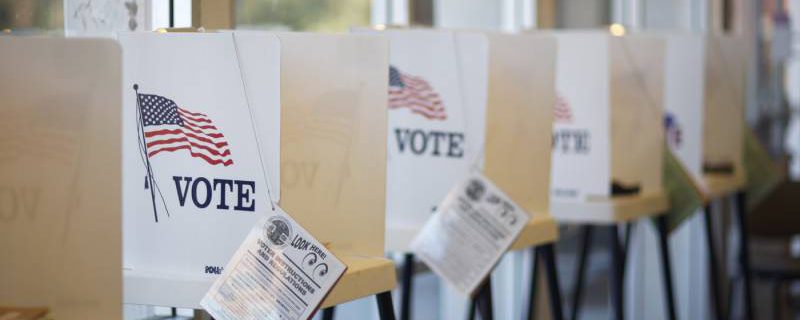
CA State Assembly District 15 voting count comes to a close

As of press time, Buffy Wicks, the Democratic incumbent, currently takes the lead with 83.9% of the votes, while Republican candidate Jeanne Solnordal has 8% and independent candidate Sara Brink has 8.1%. Wicks said she is honored to receive such a large percentage of the vote and plans to continue fighting for East Bay families on critical issues they face if she is re-elected.

Gordon Rausser donates $50M to UC Berkeley’s College of Natural Resources

ASUC Senator Sylvia Targ was surprised at the sudden change in the college’s name, adding that it felt like an overnight occurrence with little student awareness. “There has been little to no consultation, that I am aware of, to anyone who goes to the College of Natural Resources on this gift,” Targ alleged. “I don’t understand how they plan to have this money support students if they are not even willing to talk to us.”